
Who can apply
You must qualify for federal EITC and satisfy Connecticut rules, including full-year residency. Earned income, filing status, tax identification and any qualifying-child rules affect eligibility.
What help is available
The credit can reduce state income tax or contribute to a refund. Use the calculation and limits for the filing year.
Documents to prepare
- Federal return, wage statements and self-employment income and expense records.
- Social Security numbers required for eligible filers and children.
- Full-year residency and qualifying-child records, where applicable.
How to get started
Confirm federal and state eligibility
Review the DRS EITC page and the correct year’s instructions.
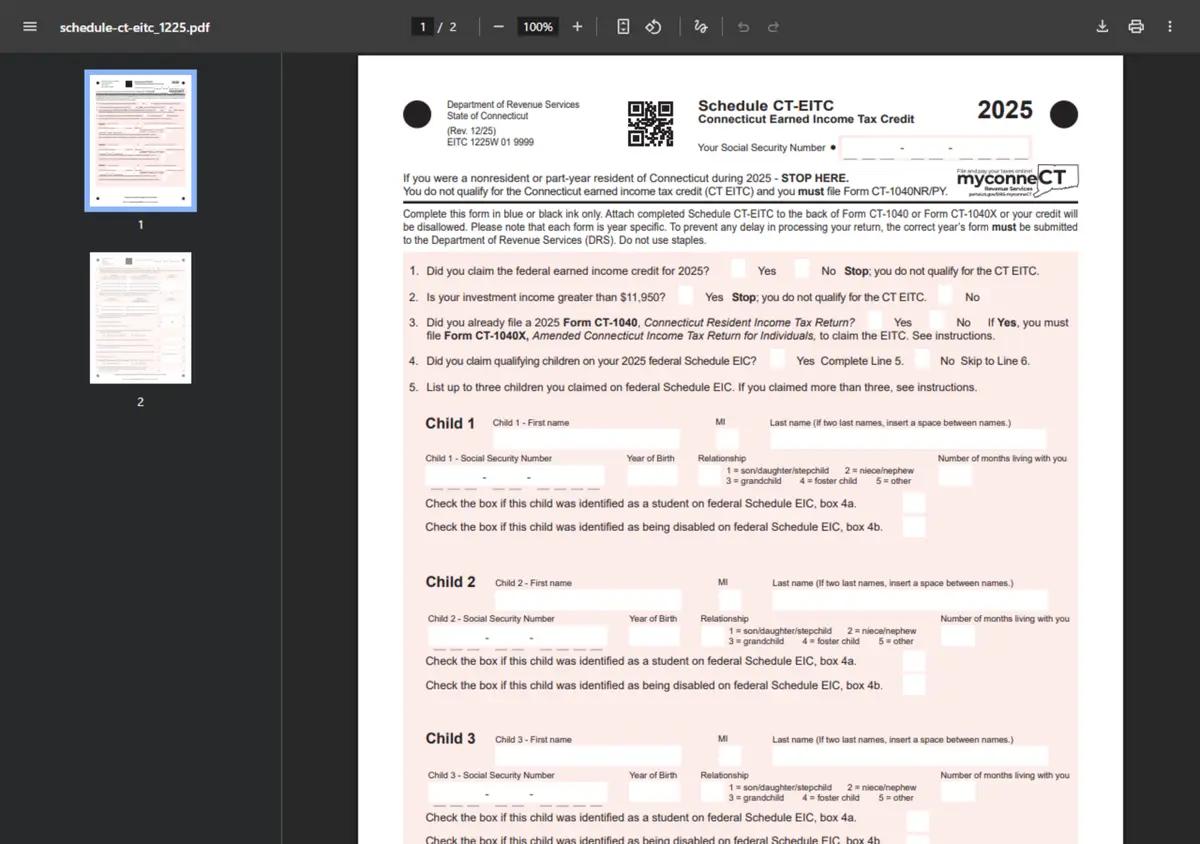
Complete Schedule CT-EITC
Use information from the federal return and retain any calculation worksheets.
File the Connecticut return
Include the required schedule. If needed, look for qualified free tax-preparation help before the filing deadline.
After applying
DRS may request supporting records. Respond to the actual notice and retain the federal and state returns together.
Website screenshots
These images show the pages captured in August 2026. Website screens and rules may have changed.
Common questions
Do I need a qualifying child?
Not always. DRS provides separate rules for filers without a qualifying child.
Is federal eligibility required?
Yes. The Connecticut credit mirrors federal EITC eligibility with additional state conditions.
Does self-employment count?
It can be earned income; retain income and expense records for the calculation.
Is this a monthly benefit?
No. It is claimed on an income-tax return.
Sources and review
Content checked October 1, 2026 using Connecticut EITC eligibility and schedule guidance. Current eligibility and the final decision remain with the program.
Historical screenshots: source reference.