
Who can apply
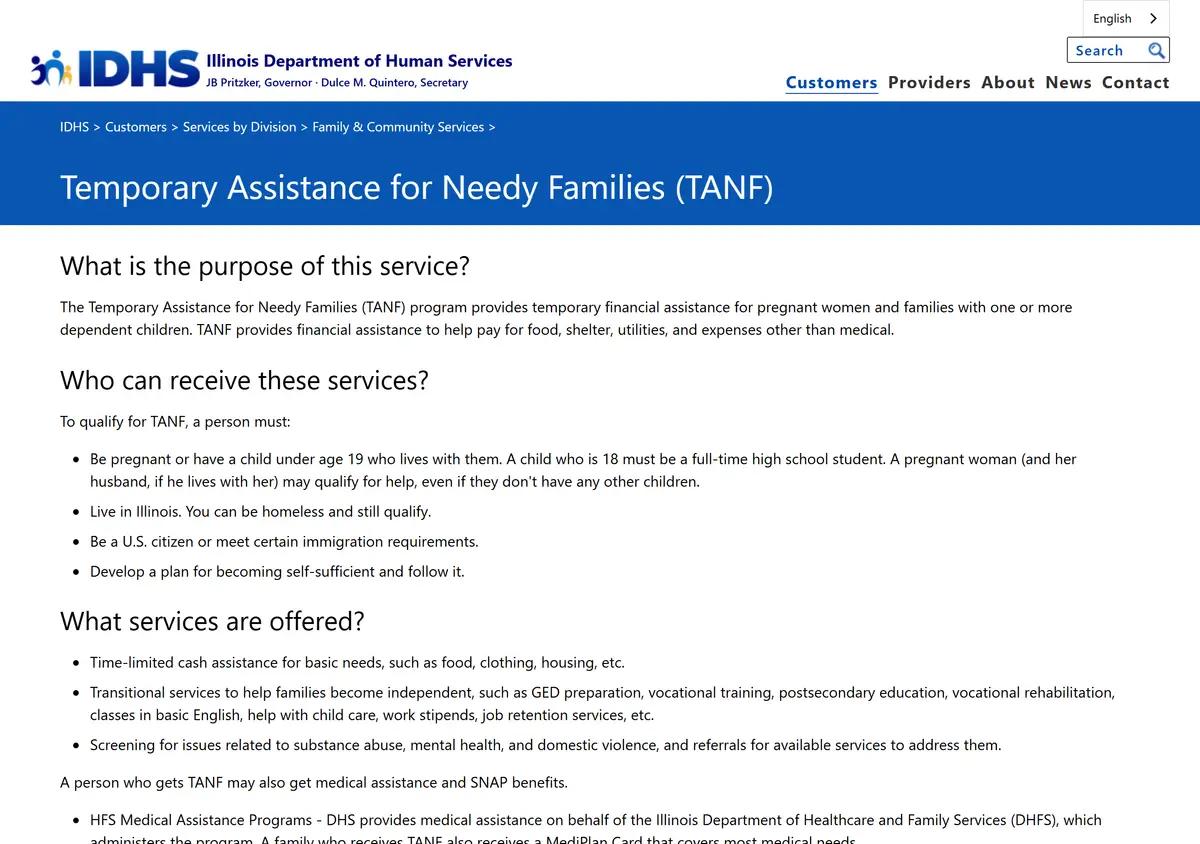
Applicants must live in Illinois and meet the program’s financial and other rules. The state includes pregnancy or a child younger than 19; an 18-year-old child must attend high school full time. Applicants develop and follow a self-sufficiency plan.
What help is available
TANF can help with food, shelter, utilities and other basic expenses. Related services can support education, work and family stability.
Documents to prepare
- Child, caregiver and household details.
- Income and expense records.
- Identification, residence and other case verification requested by IDHS.
How to get started
Start the request
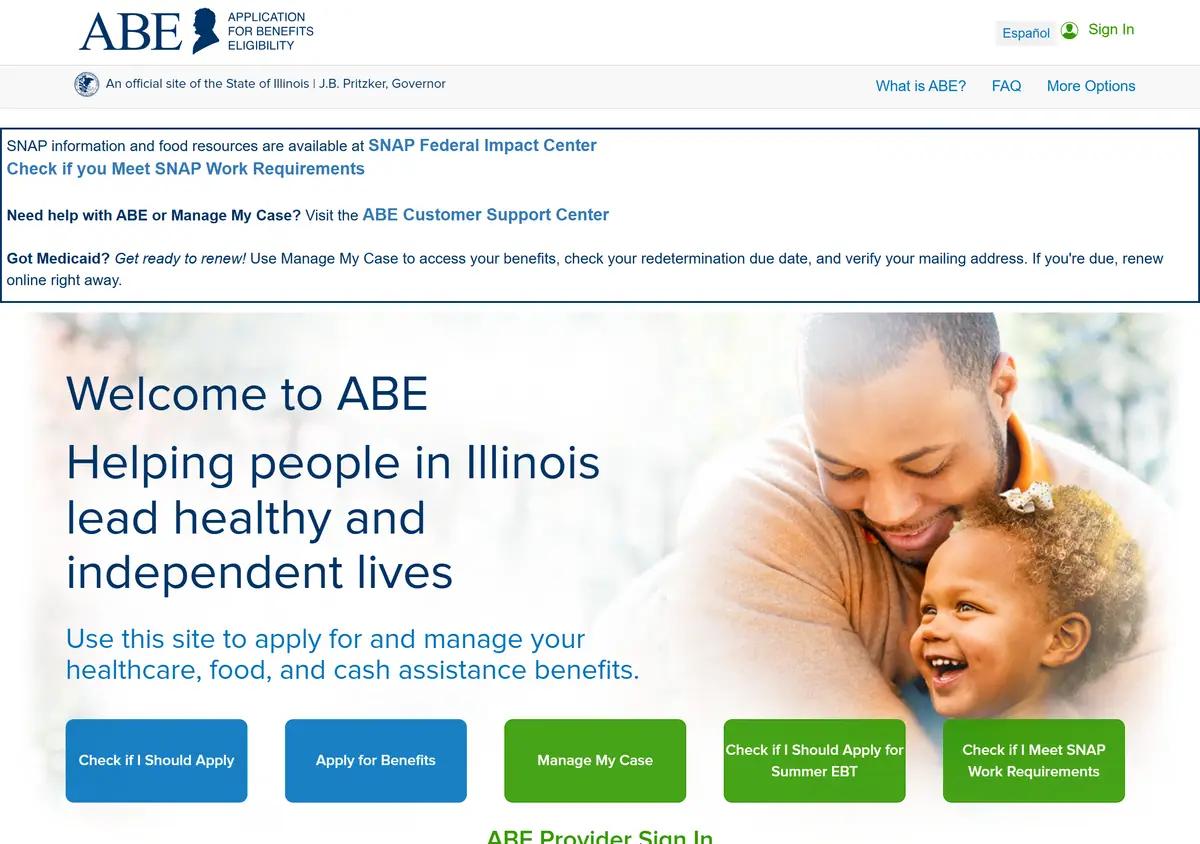
Use ABE or the Family Community Resource Center serving your area.
Return requested evidence
Provide accurate household information and complete intake.
Discuss your plan
Ask about the work, training or support activities assigned to your case.
After applying
Eligible cash benefits are issued through Illinois Link. Follow the decision notice, case plan and reporting directions.
Website screenshots
These images show the pages captured in August 2026. Website screens and rules may have changed.
Common questions
Can I apply while homeless?
Yes. The state explicitly says homelessness does not by itself prevent TANF eligibility.
Can pregnancy qualify without another child?
The state includes qualifying pregnant applicants even without other children.
Is TANF the same as SNAP?
No. SNAP is food assistance with its own determination.
What if my child is 18?
The state requires an 18-year-old dependent child to be a full-time high school student.
Sources and review
Reviewed October 1, 2026 using Illinois TANF conditions and services, application options. Agency staff determine eligibility.
Historical screenshots: source reference.